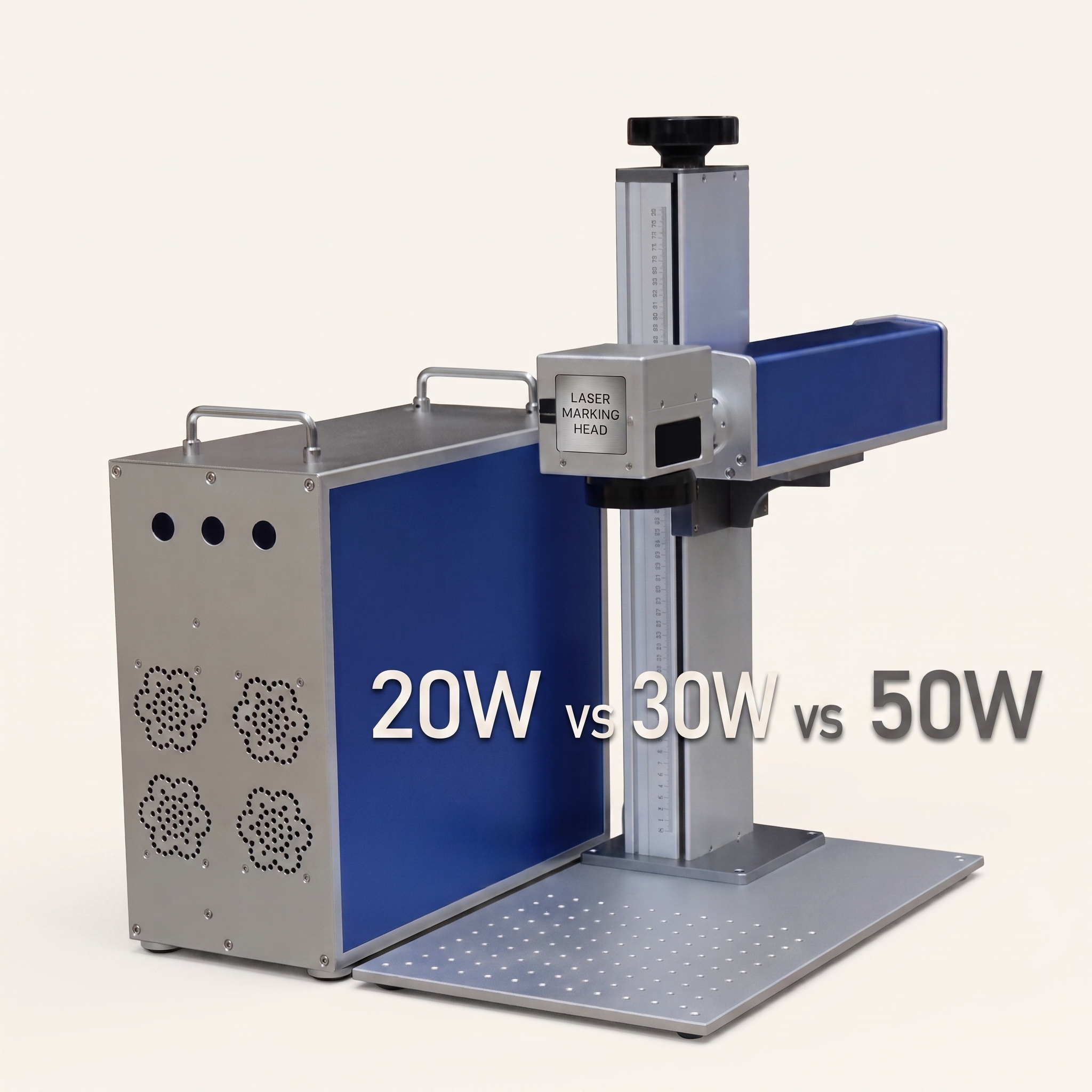

When shopping for a desktop galvo fiber laser, wattage is the single biggest factor determining price. A 20W unit starts around $1,600, while a 50W workhorse easily reaches $3,000 or more.
Because all fiber lasers operate at the same 1,064 nm wavelength, beginners often assume that higher wattage simply means “more power.” In reality, wattage dictates three specific things: marking speed, maximum engraving depth, and lens flexibility.
This guide breaks down what each wattage tier handles, where each power level struggles, and how to choose the right machine for your budget.

The Quick Answer: Wattage Summary
| Spec / Task | 20W Fiber Laser | 30W Fiber Laser | 50W Fiber Laser |
| Surface Marking (Black/White) | Excellent | Excellent (Faster) | Excellent (Fastest) |
| Marking Speed (Production) | Baseline | ~35% Faster than 20W | ~120% Faster than 20W |
| Deep Metal Engraving (Coins/Guns) | Very Slow (Many passes) | Moderate | Fast & Aggressive |
| Thin Sheet Cutting (Gold/Silver/Brass) | Not Recommended | Up to 0.3 mm (Slow) | Up to 1.0 mm (Practical) |
| Large Lenses (200mm–300mm Field) | Poor (Beam too diffuse) | Usable for light marks | Handles large fields easily |
| Typical Price Range | $1,599 – $1,899 | $1,799 – $2,399 | $2,499 – $3,199 |
1. 20W Fiber Lasers: The Surface Marking Entry Point
A 20W fiber laser is designed primarily for surface marking, serialization, and high-contrast etching.
Because 20W is concentrated into a microscopic galvo beam spot, it has plenty of energy to permanently vaporize coatings, anneal steel, and mark raw metal surfaces.
Where 20W Excels:
- Gun Parts & Knives: Etching logos, serial numbers, and graphics onto steel slides and titanium scales.
- Anodized Aluminum: Creating clean, bright white marks on business cards, phone cases, and tags.
- Tumblers & Flasks: Stripping powder coat to expose bare stainless steel underneath.
- Polymer Marking: Dark marking on firearms and industrial plastics.
The Limits of 20W:
- Deep Carving Takes Forever: If you want to carve 1 mm deep into a brass challenge coin, a 20W unit can take 45 to 60 minutes of continuous scanning.
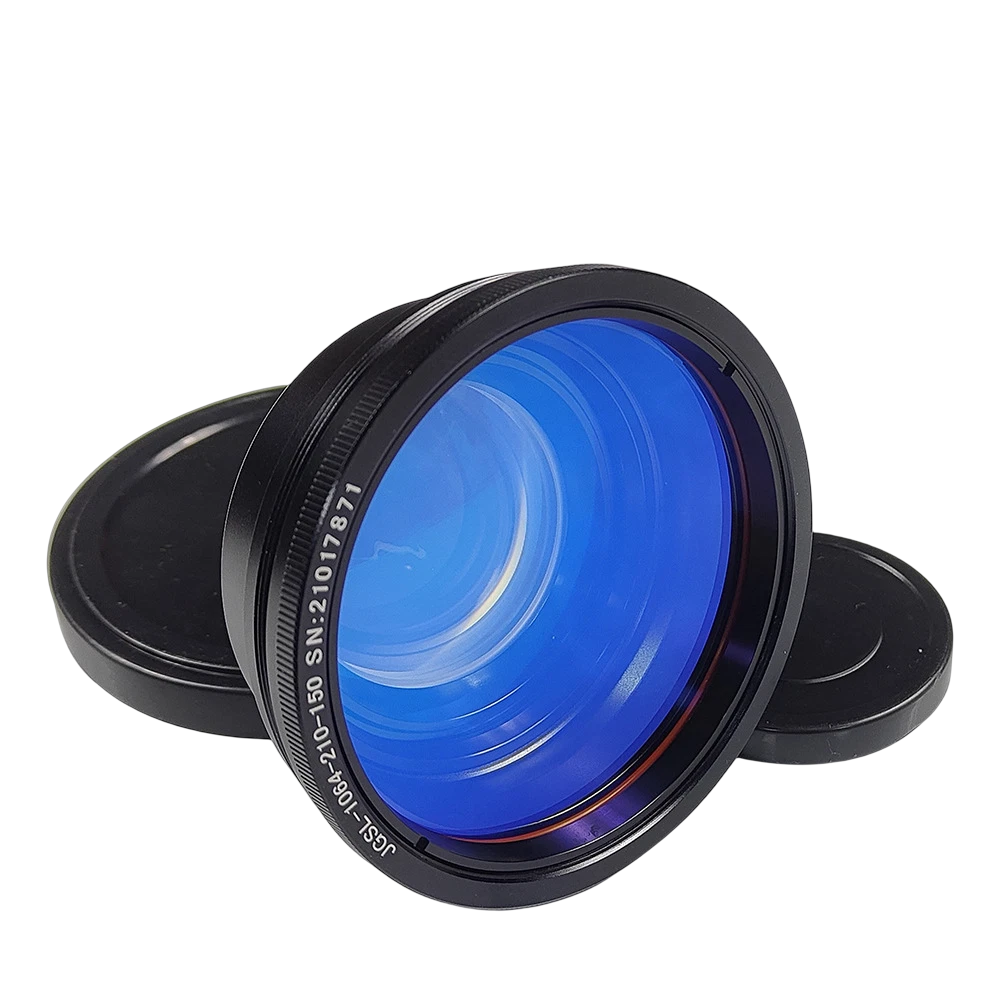
- Lens Restrictions: 20W works best with small lenses (110 mm × 110 mm or smaller). If you install a large 200 mm or 300 mm lens, the laser energy spreads across a wider focal area, dropping power density below what is needed for effective metal engraving.
2. 30W Fiber Lasers: The Best Budget Sweet Spot
A 30W fiber laser is the most popular choice for hobbyists and emerging small shops.
The additional 10 watts might sound modest on paper, but in pulse power it delivers roughly 30% to 40% faster surface processing and substantially better material penetration than a 20W unit.
Where 30W Excels:
- Batch Production: Running serial plates, custom EDC gear, and knife blades significantly faster.
- Moderate Depth: Capable of achieving 0.5 mm to 1 mm depth in brass, silver, and copper in a practical timeframe (15–20 minutes).
- Lens Versatility: Drives a 150 mm × 150 mm or 175 mm × 175 mm field lens without suffering severe power drop-off.
- Light Jewelry Cutting: Can cut thin sterling silver or gold sheet (up to 0.3 mm) using repeated LightBurn passes, making it suitable for simple jewelry nameplates.
The Limits of 30W:
- Deep bas-relief carving is still relatively slow compared to a 50W machine.
- Cutting metal thicker than 0.5 mm is impractical due to slag build-up and slow cycle times.
3. 50W Fiber Lasers: The Commercial Workhorse
If you plan to run a commercial metal engraving business, deep-carve 3D coins, stipple gun frames, or cut precious metals, 50W is the industry benchmark.
At 50W, the laser delivers high peak power per pulse. It clears material rapidly with each scan line instead of just skimming the surface.
Where 50W Excels:
- 3D Relief & Coin Carving: Deep-engraving brass coins, leather branding stamps, and steel stamping dies in 8 to 15 minutes.
- Production Speed: Completes daily serial and barcode marking 2x to 3x faster than a 20W machine.
- Sheet Metal Cutting: Cleanly cuts through 0.5 mm to 1.0 mm brass, aluminum, gold, and sterling silver jewelry blanks.
- Large Field Lenses: Easily powers 200 mm × 200 mm and 300 mm × 300 mm F-theta lenses, giving you a massive workspace without losing engraving capability.
The Limits of 50W:
- Higher Upfront Cost: Requires a larger budget.
- Heat Management on Thin Stock: Extra power requires dialing back settings on delicate foils to prevent heat warping.
Price vs. Power: Factoring in Savings
When budgeting for a machine, the price gap between power levels is often narrower than it appears once active promotions are applied.
Before purchasing an entry-level unit, check our verified OMTech discount code page. Taking 5% off a $2,500 to $3,100 commercial machine cuts $125 to $155+ off your purchase, often bringing a 50W unit down close to the price of a standard 30W setup.
Which Wattage Should You Buy?
- Choose 20W if: You only want to mark serial numbers, etch knives, personalize tumblers, or mark anodized aluminum, and your workspace needs remain under 110 mm × 110 mm.
- Choose 30W if: You want the best balance of price and speed for a small side business and plan to do light depth engraving alongside daily marking tasks.
- Choose 50W if: You produce challenge coins, gun slides, or jewelry blanks, need maximum job turnaround speed, or require a larger 200 mm+ work area.
Frequently Asked Questions
Can a 20W fiber laser deep engrave metal?
A 20W laser can achieve depth, but it is slow. Carving 1 mm deep into brass can take over an hour, whereas a 50W fiber laser achieves the same depth in 10 to 15 minutes.
Can a 30W fiber laser cut metal?
A 30W fiber laser can cut thin sheets of silver, brass, and gold up to approximately 0.3 mm using multiple LightBurn passes, but it is not built for routine production cutting.
Why does lens size matter for fiber laser wattage?
Larger lenses expand the working area but spread beam energy over a larger spot size. A 20W laser loses substantial cutting power on a 200 mm or 300 mm lens, while a 50W laser maintains sufficient power density to engrave effectively across larger fields.

Leave a Reply